Tree highlight: bur oak
Bur oak
Quercus macrocarpa (Family Fagaceae)
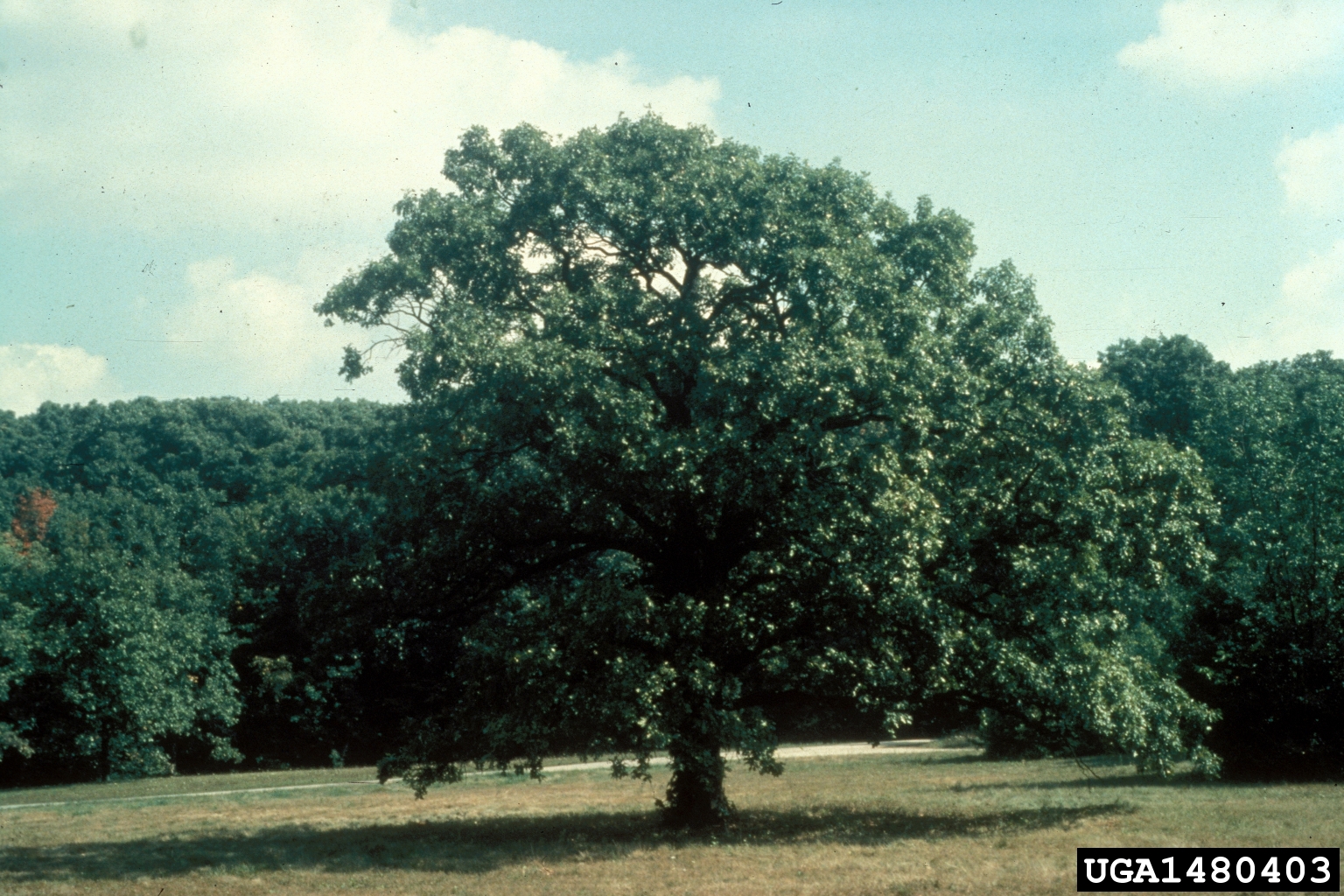
Bur oak is known for its resilience, especially in dry, drought-prone landscapes
The basics
Bur oak (or burr oak) is a slow-growing, long-lived deciduous tree that grows to 80 feet in height. It is native to the North American Midwest, from southern Canada and the Dakotas south to Texas, and east into Kentucky, Ohio, and Ontario. The leaves of bur oak are thick; they can grow up to 10 inches long and 5 inches wide and are deeply lobed at the base with shallower lobes toward the tip. The acorns are very large — up to 1-1/2 inches in diameter — and have a distinctly fringed cap. Bur oak thrives in open savannahs, prairies, and pasture lands, and does especially well on dry or drought-prone sites. Also called “blue oak,” “mossycup oak,” or “scrub oak,” it is incredibly sturdy, and is prized for its durability and spreading crown.
Did you know?
- The common name ‘bur oak’ describes the cup (or cap) of the acorn, which resembles the spiny burs of chestnut.
- Bur oak was designated the official city tree of Lexington, Kentucky, in 2018.
- The scientific name ‘macrocarpa’ means “large fruit,” so named because of the extremely large acorns.
- Bur oak is fire-resistant, making it an ecological staple in regions with historic prairie burns.
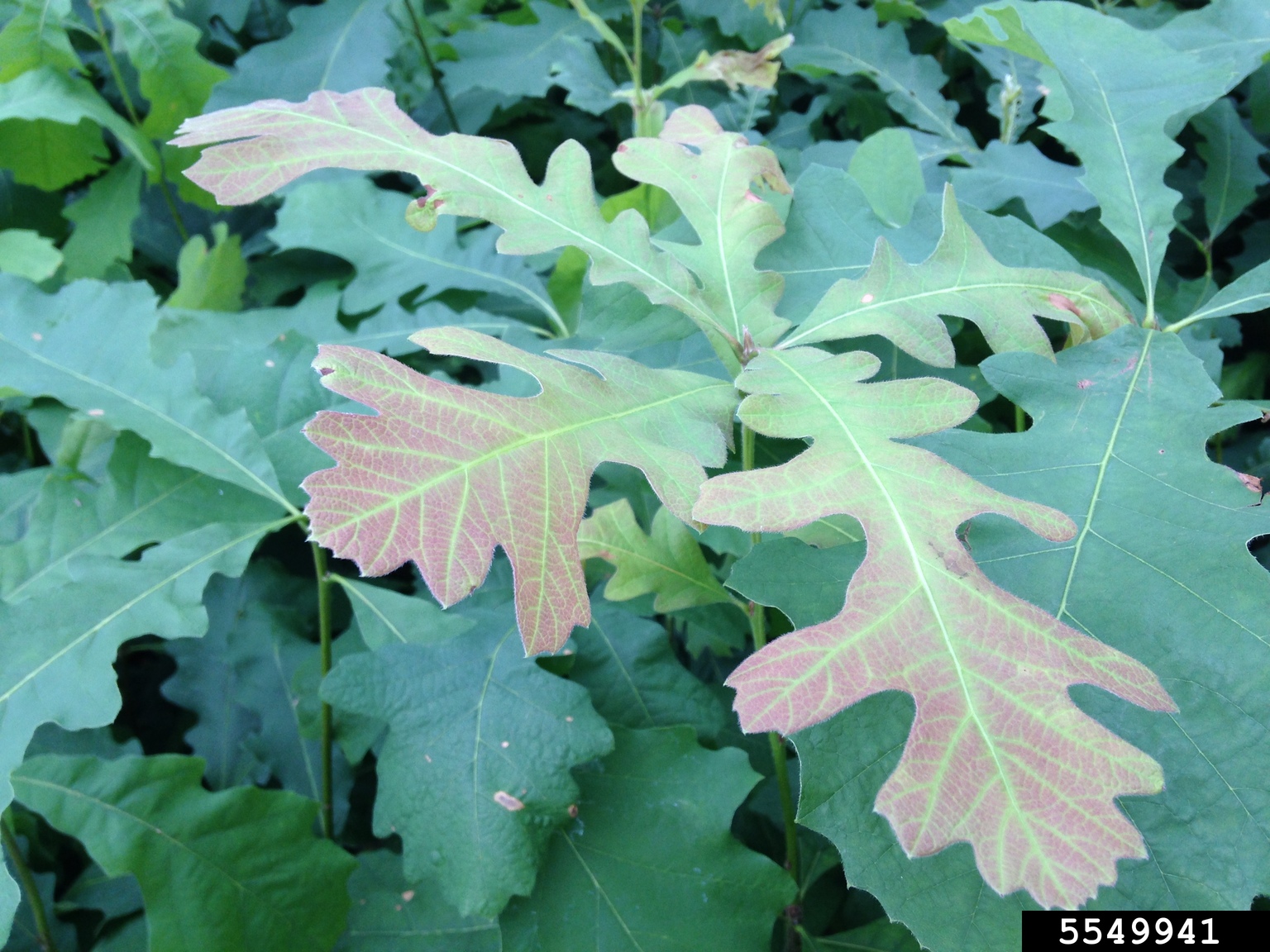
Leaves are thick and can grow up to 10 inches long
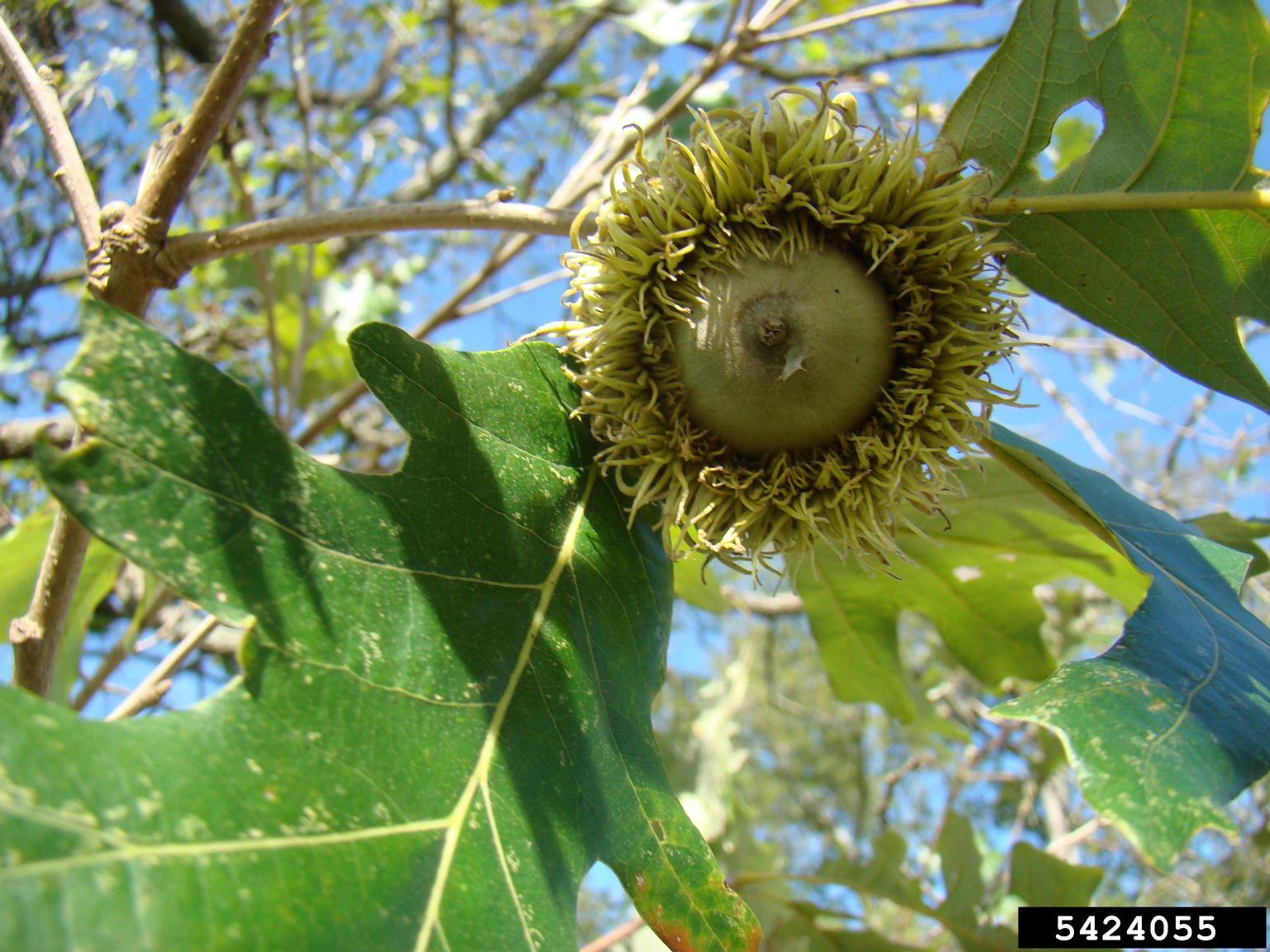
Acorns are very large and have a distinctly fringed cap
Wildlife
- Bur oak acorns are nutrient-rich and provide key seasonal food for animals such as wild turkey, squirrel, and deer.
- The large, spreading canopy of bur oak offers roosting and nesting opportunities for birds such as owls, woodpeckers, and songbirds.
- Bur oak hosts over 500 species of moths and butterflies and also the birds that feed on them.
Uses
- Bur oak has a deep root system that stabilizes the soil, helping prevent wind-driven erosion across the savannah landscapes where the tree naturally thrives.
- Bur oak wood is prized for its use in cabinetry and flooring, and is also used to craft bourbon barrels.
- Indigenous peoples utilized bur oak in a variety of ways; they used the roots and bark for medicinal purposes, ground the acorns into flour for food, and harvested the wood for timber.
- Bur oak is commonly planted in parks and large landscapes for its shade, beauty, and longevity.
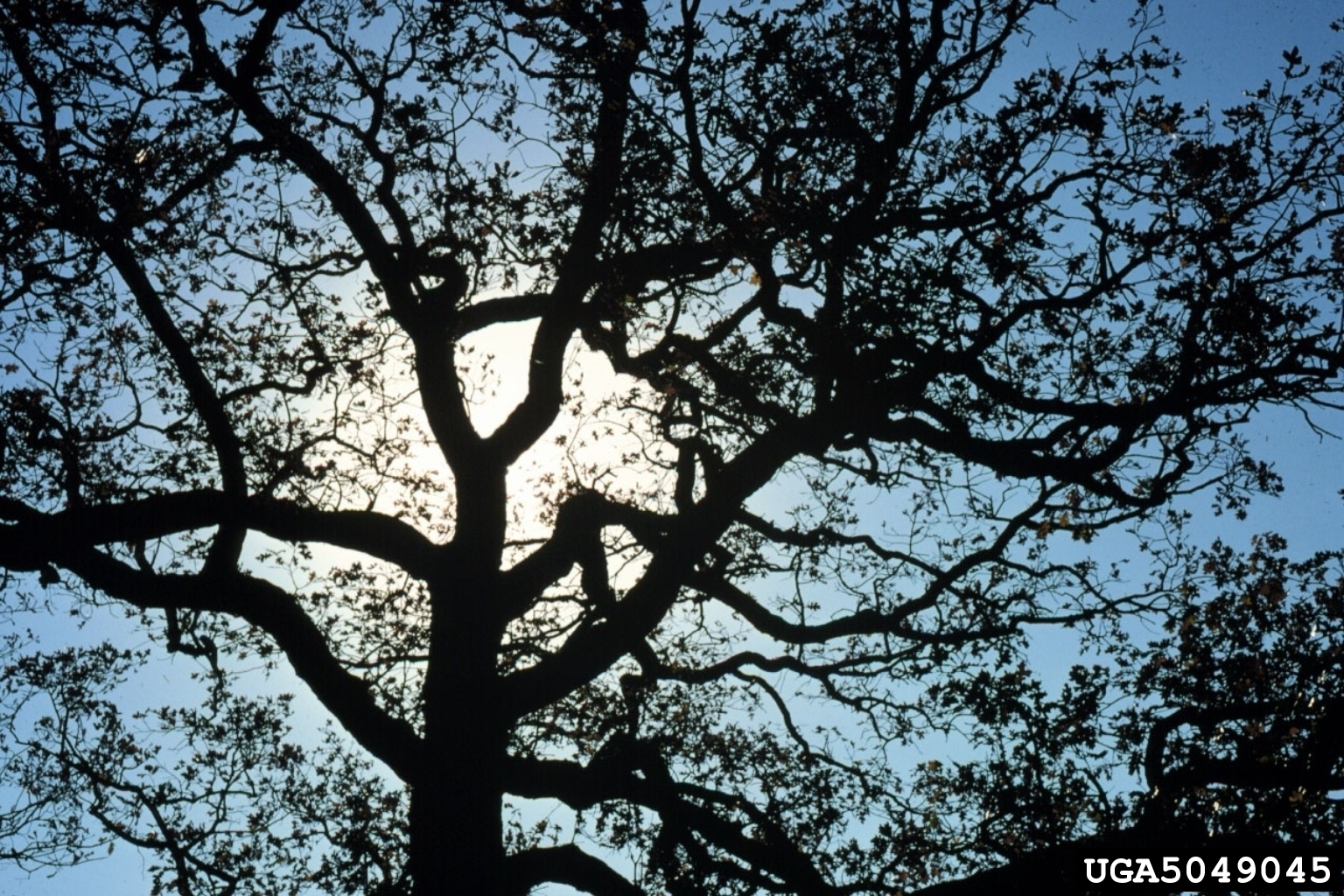
Commonly planted in parks and large landscapes for its shade, beauty, and longevity

Benefits
Over a 20-year period, a healthy bur oak with a diameter of 20 inches will offset 14,379 car miles worth of CO2, absorb enough stormwater to fill 828 bathtubs, and remove an amount of pollution from the air – in gaseous and particulate form – equivalent in weight to 71 smartphones! Learn more at: https://mytree.itreetools.org/
Bur Oak Tree of the Week video
By University of Kentucky Forestry and Natural Resources Extension
Click to watch