Tree highlight: Chinese elm
Chinese elm
Ulmus parvifolia (Family Ulmaceae)
The basics
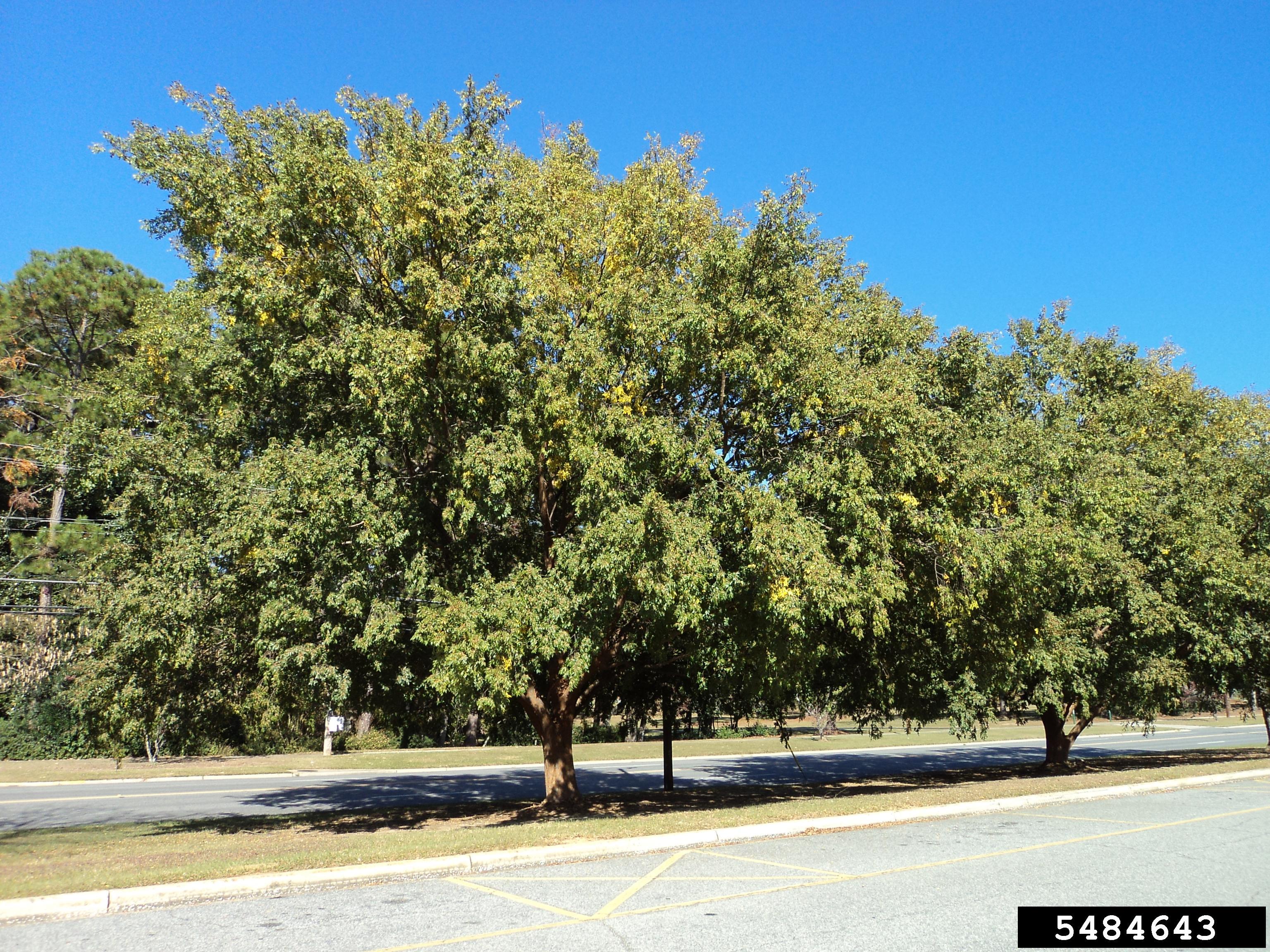
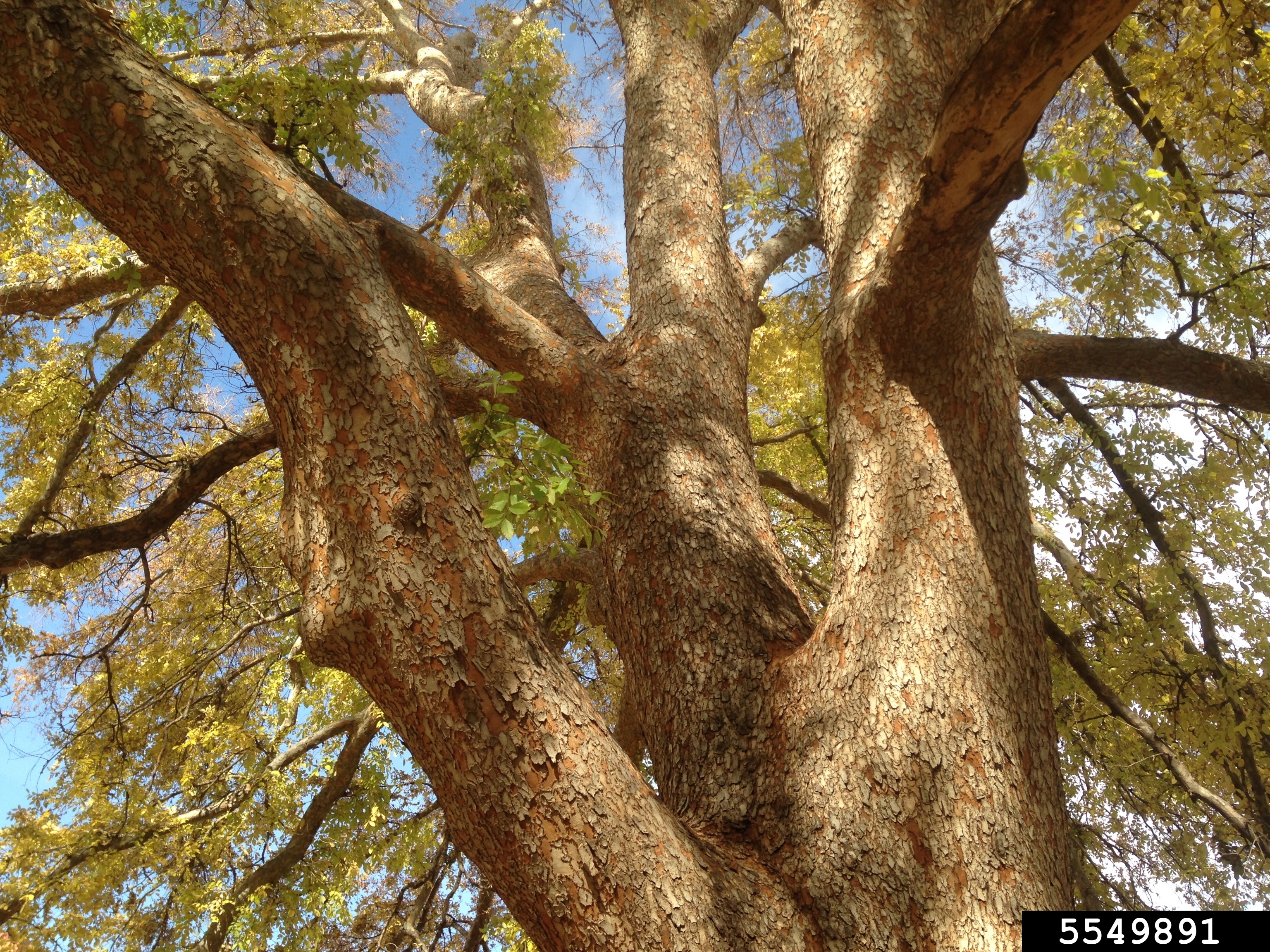
Chinese elm is native to Japan, Korea and China, and is an admired and much-used ornamental and shade tree in streets, parks and gardens across the United States, especially in the south. It is a fast growing, medium-sized tree that grows up to 50 ft tall, with a rounded, upright crown. Chinese elm has very characteristic lacy bark which gives it another common name of ‘lacebark elm’; the bark peels in scales of varying shades of brown, orange and tan, contributing to its visual interest. Chinese elm leaves are the smallest among elms; they are 1-3 in long, elliptical and glossy. The seeds are produced in the fall and are rounded, papery, winged samaras about 1/2 inch in diameter. Because of the many seeds it produces, Chinese elm can become weedy and is naturalized in some areas. The branches can break easily in windy and snowy conditions.
Did you know?
- In contrast to most elm species, Chinese elm blooms in late summer and produces small, round, winged samaras in the fall.
- Chinese elm is resistant to the fungus causing Dutch elm disease, and to Japanese beetle and elm leaf beetle feeding, unlike other elm species.
- Chinese elm is susceptible to Chinese elm anthracnose, a fungus that causes black spots on leaves and severe cankers on twigs, branches, and the main trunk.


Wildlife
- Spiny elm caterpillars, which are the larvae of the ‘mourning cloak’ butterfly, feed on Chinese elm leaves.
- Many bird species eat Chinese elm fruits and use the branches for nesting.
Uses
- Chinese elm it is an excellent shade and street tree thanks to its adaptability, the round crown, and its resistance to pest and diseases. However, it can become weedy and is invasive in some areas of the US.
- Chinese elm has many medicinal uses. The bark has diuretic and expectorant properties, and the flowers can treat fevers.

Benefits
Over a 20-year period, a healthy Chinese elm with a diameter of 8 inches will offset 6,911 car miles worth of CO2, absorb enough stormwater to fill 725 bathtubs, and remove an amount of pollution from the air – in gaseous and particulate form – equivalent in weight to 41 smartphones! Learn more at iTreetools.
Contact Us
Images sourced from forestryimages.org