Tree highlight: Northern red oak
Northern red oak
Quercus rubra (Family: Fagaceae)

The basics
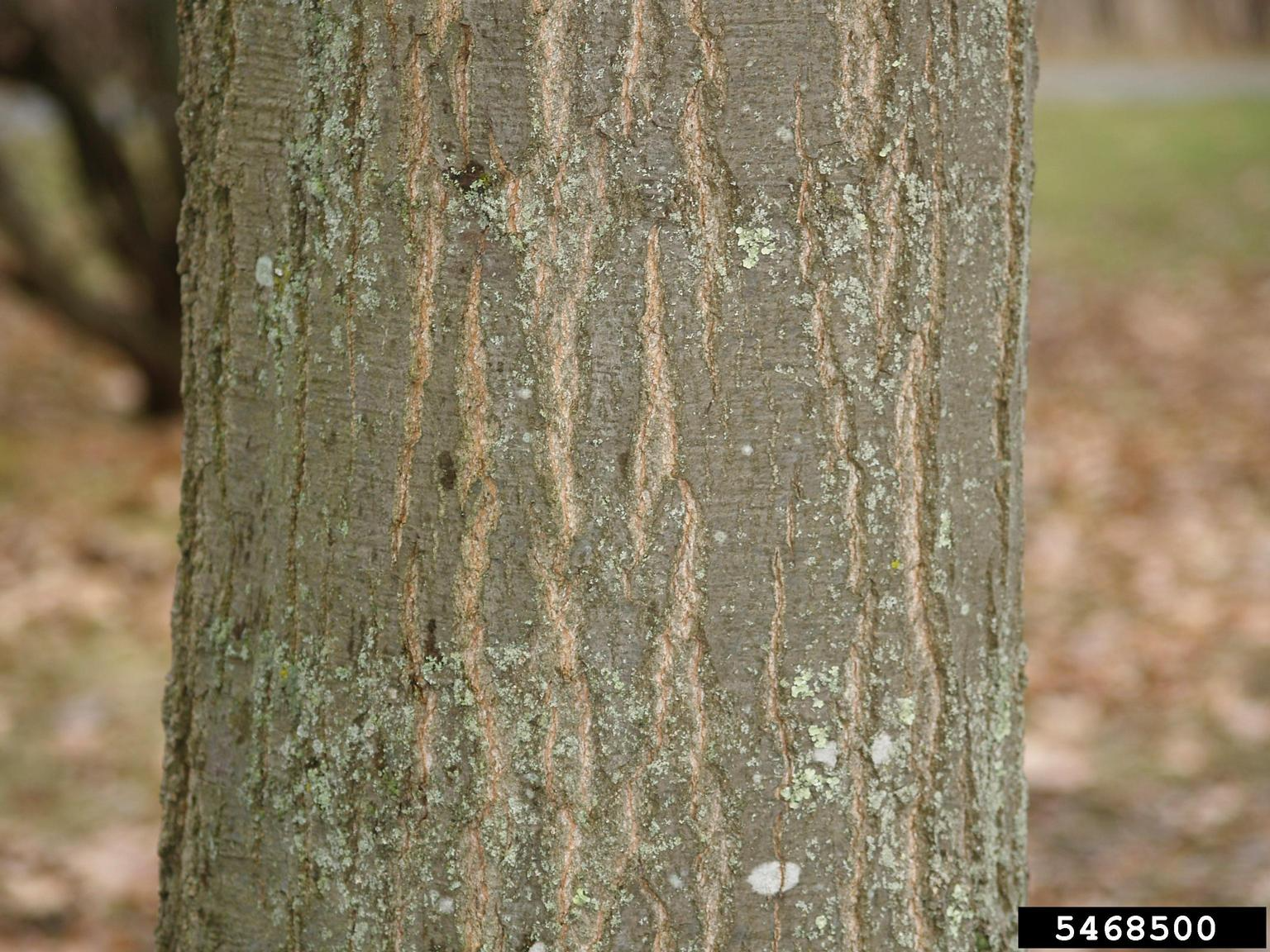
Northern red oak is a large, fast-growing deciduous tree that is a dominant component of eastern deciduous forests. It is native to eastern and central North America, from southern Canada south to Alabama and Georgia, and from the east coast west to Minnesota and Oklahoma. Also called ‘eastern red oak’ or simply ‘red oak,’ northern red oak prefers upland forests with well-drained soils and is prized in landscaping for its spreading crown and stately presence. The leaves are simple, symmetrical, and approximately 7 inches in length. They have pointed lobes with bristle tips and smooth undersides and turn brilliant red in the fall. The leaf petioles (leaf stems) and twigs are also smooth and tinged with red. The acorns are smooth and 1 to 1 ¼ inch long with a round cap that resembles a beret. Northern red oak bark has shiny gray vertical streaks and ridges; these streaks are sometimes called “ski tracks” and distinguish northern red oak from the similar Shumard oak (Q. shumardii).
Did you know?
- Northern red oak is one of the fastest growing hardwoods.
- The wood is dense and durable, making it ideal for flooring and fine carpentry.
- Northern red oak acorns take two years to mature.
- Northern red oak is a preferred host for the non-native, invasive spongy moth caterpillar, which is not yet found in Kentucky.


Wildlife
- The acorns are an essential food source for deer, turkey, squirrel, blue jay, and numerous other wildlife species.
- Northern red oak supports hundreds of caterpillar species, thereby enriching food webs for insect-eating birds. Birds are an important disseminator of northern red oak seed.
- Mature red oaks offer habitat and nesting space for birds, mammals, and insects.
Uses
- Northern red oak is a popular choice in parks and yards for shade, fall color, and fast growth.
- The wood is used for cabinetry, furniture, flooring, and architectural trim like handrails and molding.
- The deep root systems help stabilize slopes and reduce erosion in upland settings.
- Indigenous peoples used the bark of northern red oak to treat heart and respiratory ailments, and as an astringent for cleansing wounds and skin conditions.

Benefits
Over a 20-year period, a healthy northern red oak with a diameter of 20 inches will offset 13,610 car miles worth of CO2, absorb enough stormwater to fill 825 bathtubs, and remove an amount of pollution from the air – in gaseous and particulate form – equivalent in weight to 72 smartphones! Learn more at iTreetools.
Tree of the Week video
By University of Kentucky Forestry and Natural Resources Extension.
Click to watchContact Us
Images sourced from forestryimages.org