Tree Highlight: red maple
Red maple
Acer rubrum (Family Sapindaceae)
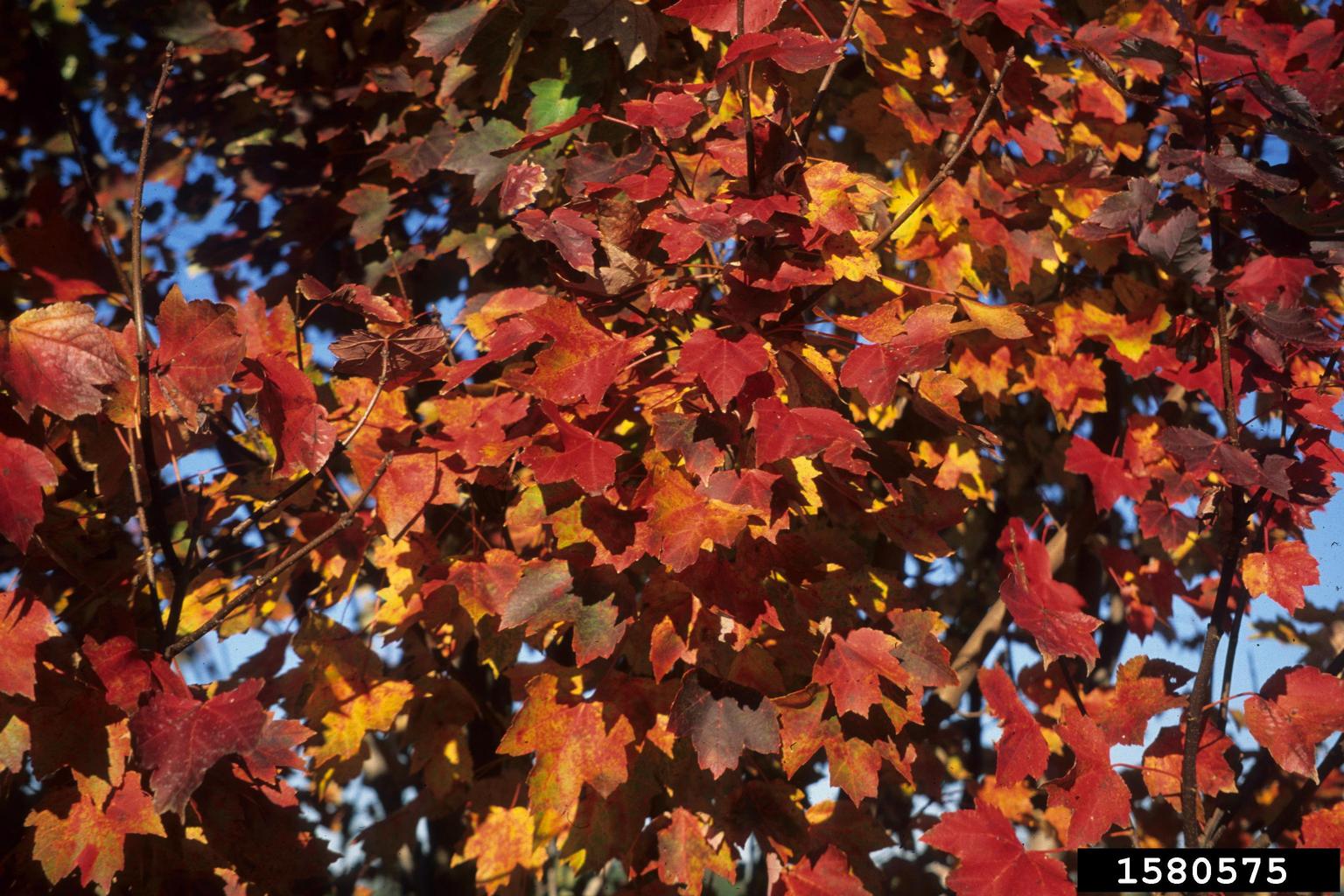
Red maples have vibrant red foliage in the fall.
The basics
Red maple is best known for its foliage that turns brilliant shades of red in the fall. This medium to large deciduous tree is native to eastern and central North America — from southeastern Canada to northern Florida and westward to Minnesota and eastern Texas. Red maple, also called ‘swamp maple,’ ‘scarlet maple,’ or ‘soft maple,’ is known for its ability to thrive in a wide variety of habitats, including swamps, upland forests, rocky ridges, and urban environments. Its leaves are simple, 2-6 inches in length, have serrated (toothed) edges, and are typically 3-lobed. The tree produces clusters of small red flowers in early spring before the leaves emerge, followed by pairs of winged seeds (samaras), which can be seen falling to the ground like helicopter blades in late spring and early summer. Its rapid growth and tolerance to many soil types make red maple a go-to species for landscaping and ecological restoration projects.Did you know?
- Red maple gets its name from the brilliant red of its fall foliage and the reddish hue found in its flowers, twigs, seeds, and leaf stems.
- This is one of the most widespread and abundant hardwood species in eastern North America.
- Red maple wood is considered versatile and beautiful; it is commonly used for furniture, cabinets, and musical instruments.
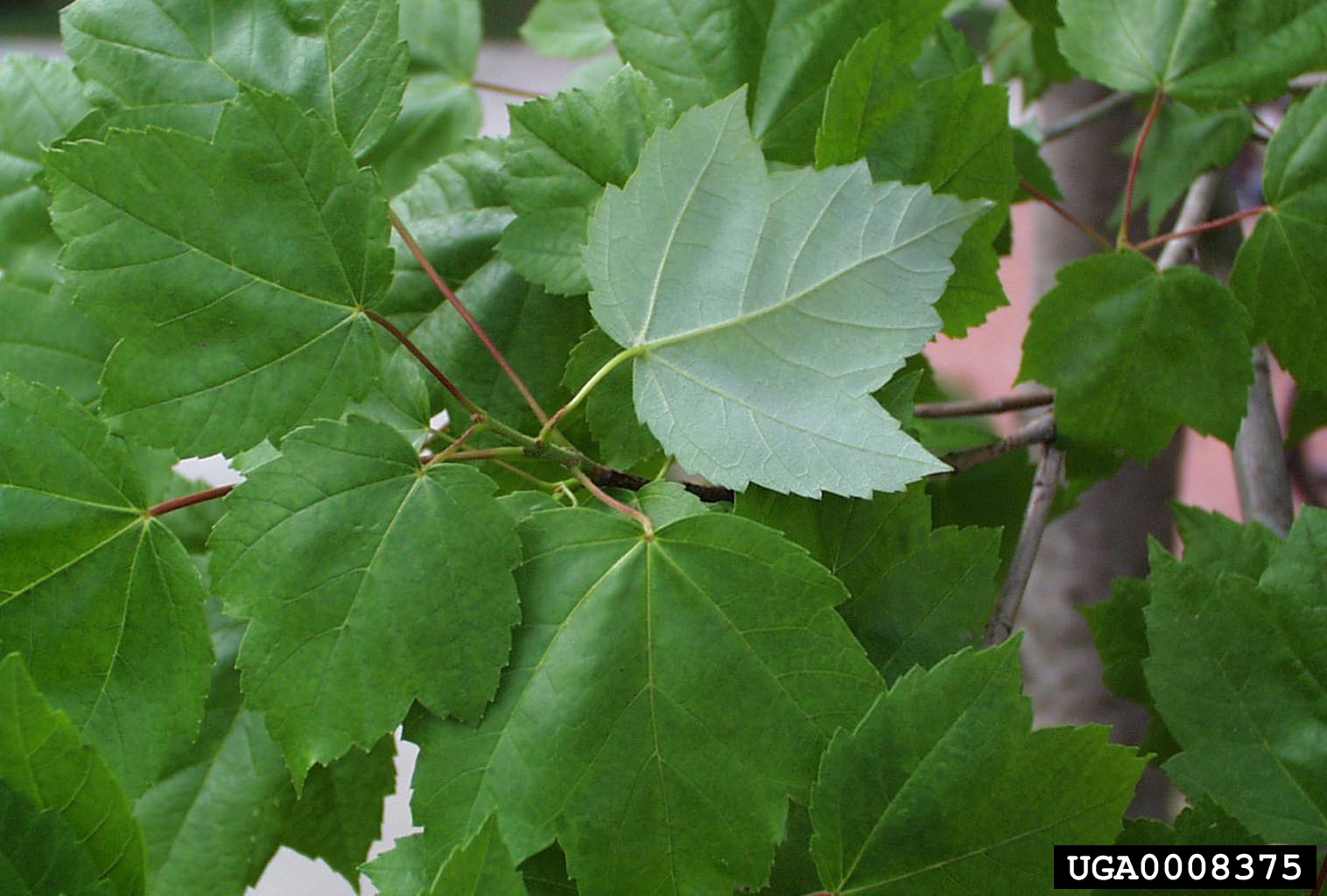
Red maple leaves are green during spring and summer, but its petioles (leafstalks), remain red year round.
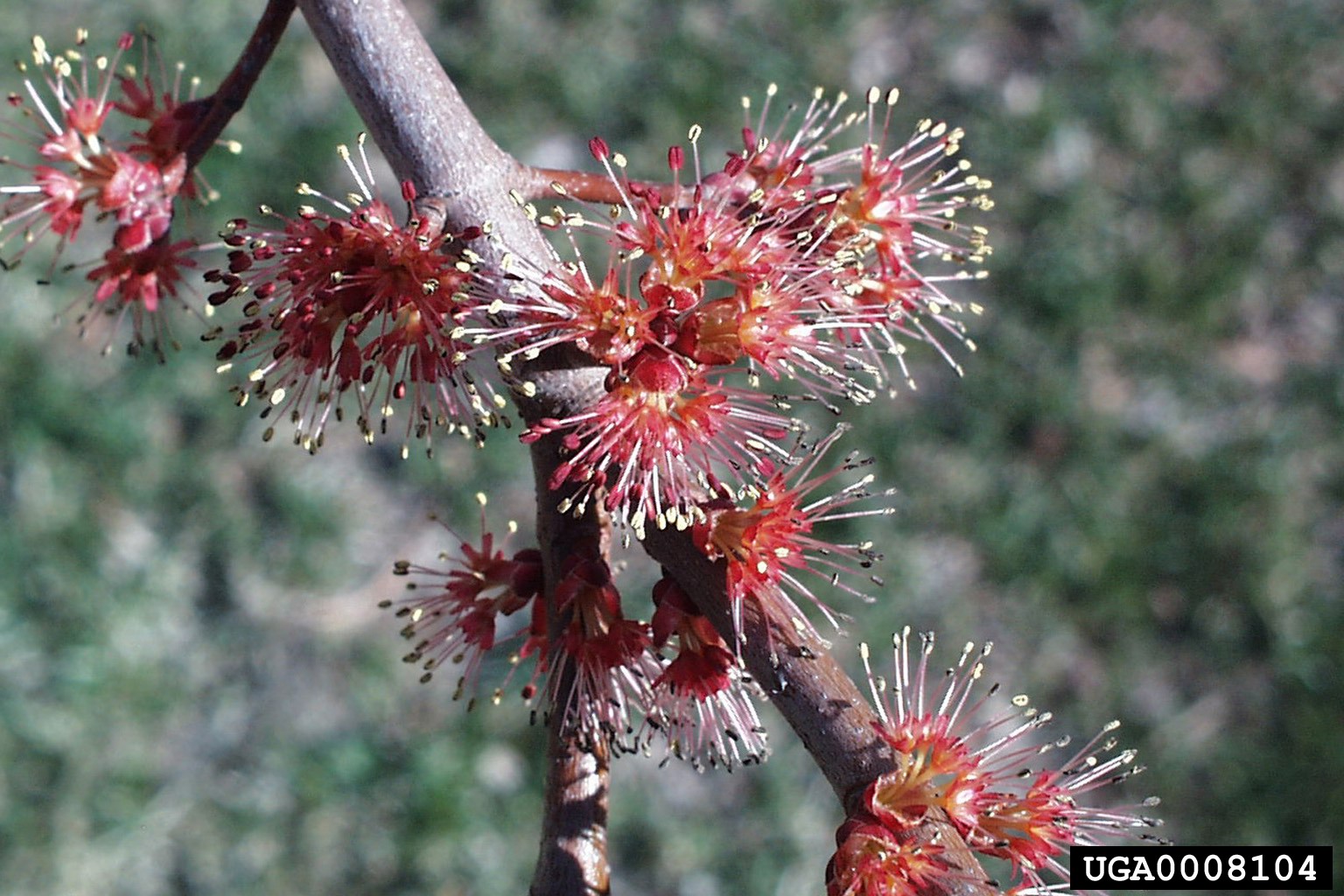
Red maple flowers are a widespread source of food for pollinators.
Wildlife
- Red maple provides important habitat for birds, squirrels, and chipmunks, as they nest in the tree and consume its seeds.
- Early spring flowers are an essential nectar source for bees and other pollinators.
- Caterpillars of various moth and butterfly species feed on its foliage, supporting insectivorous birds.
Uses
- Red maple is frequently planted in urban settings for its stunning fall color, moderate drought resistance, and pollution tolerance.
- This species can be tapped and the sap used to make maple syrup (although it has a lower concentration of sugars than the sugar maple).
- It has an extensive root system and does well in moist conditions, making it ideal for streambank plantings.
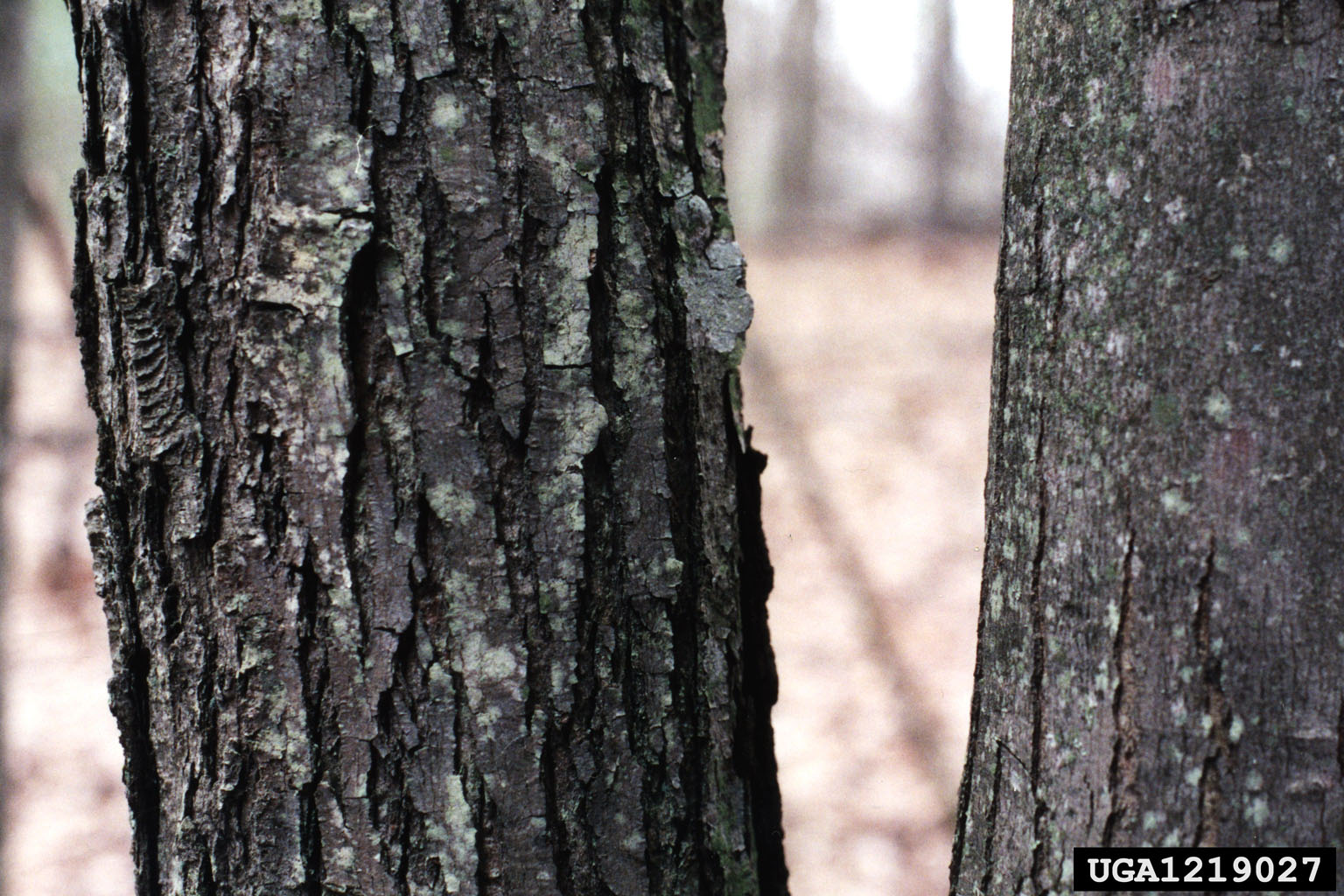
Older red maple trees have more furrowed bark than younger trees.

Benefits
Over a 20-year period, a healthy red maple with a diameter of 20 inches will offset 13,452 car miles worth of CO2, absorb enough stormwater to fill 794 bathtubs, and remove an amount of pollution from the air – in gaseous and particulate form – equivalent in weight to 66 smartphones! Learn more at: https://mytree.itreetools.org/
Tree of the Week video
By University of Kentucky Forestry and Natural Resources Extension.
Click to watchContact us: ufi@uky.edu
Images sourced from forestyimages.org