Tree highlight: slippery elm
Slippery elm
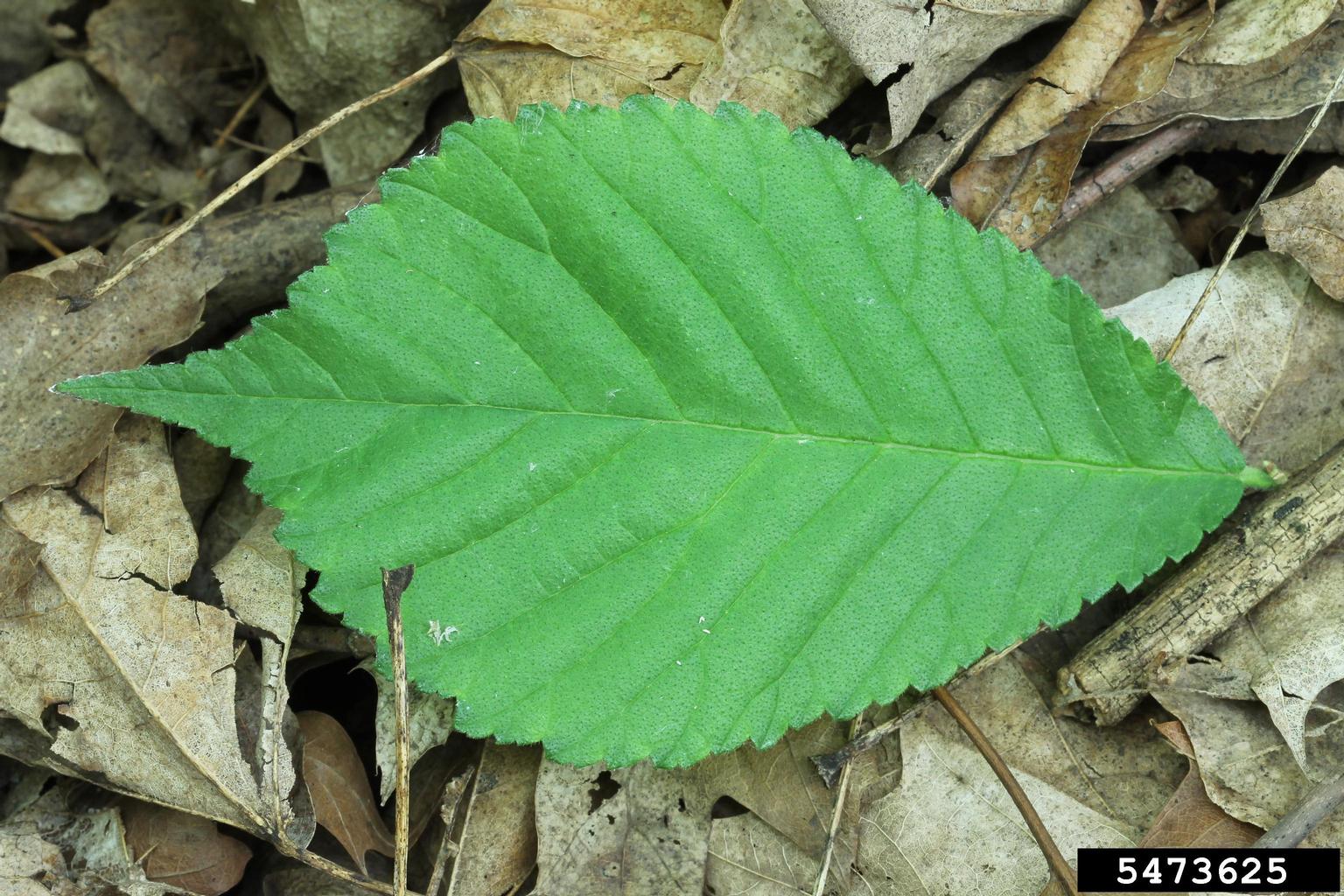
Leaves are rough to the touch, with hairy upper surface and velvety underside
The basics
Slippery elm is a moderately fast growing, deciduous tree that grows to 70 feet and is native to eastern North America, excluding the extreme south. Also called ‘red elm,’ ‘gray elm,’ or ‘soft elm,’ slippery elm grows best on moist, rich soils of floodplains and lower slopes, but tolerates dry limestone hillsides. The bark is dark grey to reddish brown and deeply furrowed. Slippery elm flowers in late winter-early spring, well before budbreak. The seeds are small oval samaras (winged seeds) that mature in spring and are dispersed by wind. Leaves of slippery elm are 4-8 inches in length, oval-shaped, simple, with doubly serrated margins, parallel veins, and an uneven leaf base. The leaves are hairy above and velvety below and rough to the touch. This feature helps distinguish slippery elm from American elm (U. americana), whose leaves are slightly smaller and less rough.
Did you know?
-
The inner bark of slippery elm is slick and slimy, which gives the tree its common name.
-
The seeds of slippery elm were a favorite food of the now extinct passenger pigeon.
- Slippery elm is less susceptible to Dutch elm disease than American elm, making it easier to find mature trees of this species.
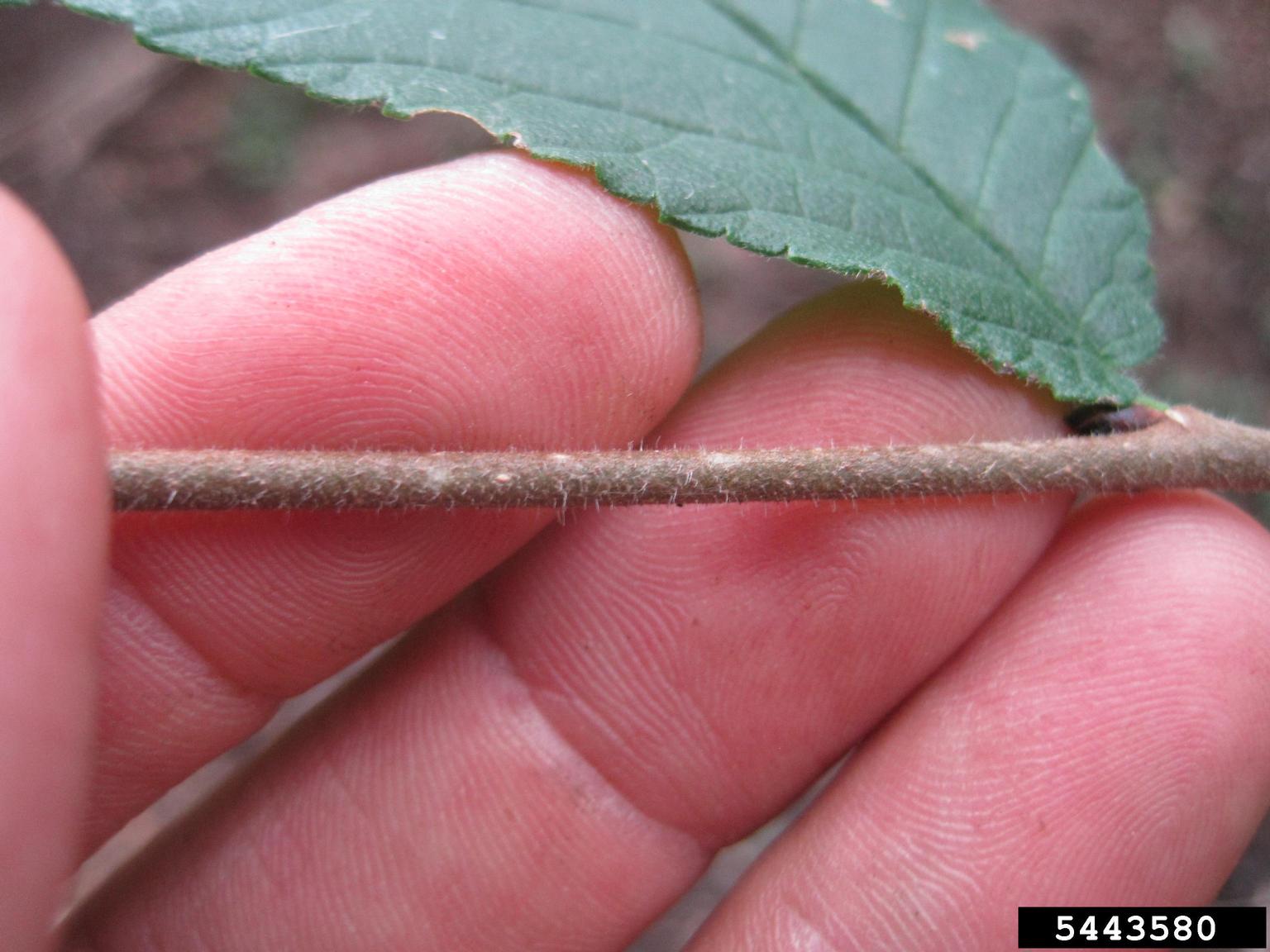
Rough, gray-brown twig of the slippery elm
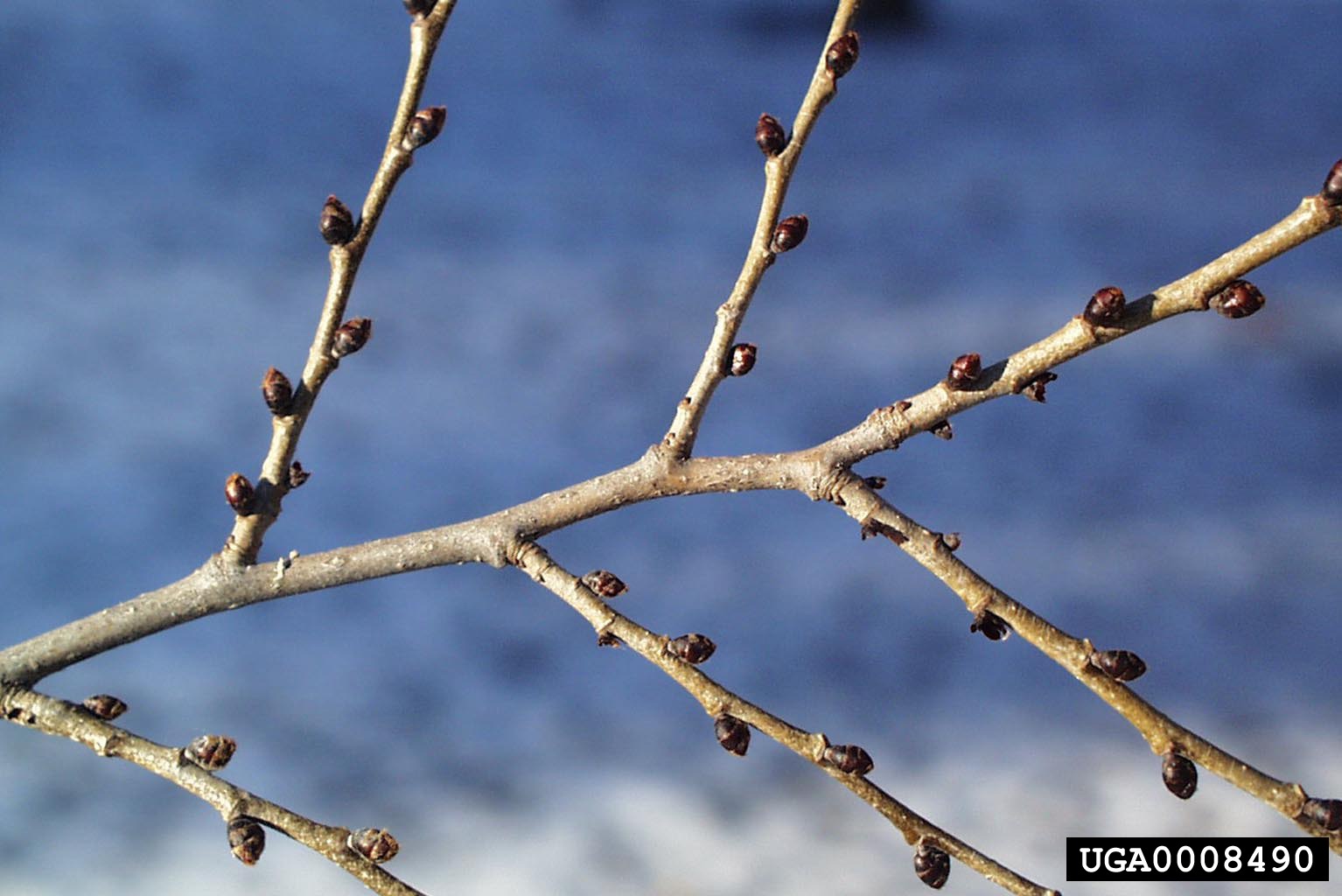
Reddish buds of the slippery elm
Wildlife
- Seeds are eaten by birds and small mammals.
- Young shoots and tender foliage are important for browsing rabbits and deer.
- Slippery elm is a host plant to many insects, which in turn pollinate and are a food source for other wildlife.
Uses
-
The inner bark of slippery elm is used in herbal medicine and was traditionally chewed for sore throats.
-
The wood of slippery elm is used for boxes and specialty items.
- Slippery elm has a shallow, spreading root system that holds a large area of soil in place.
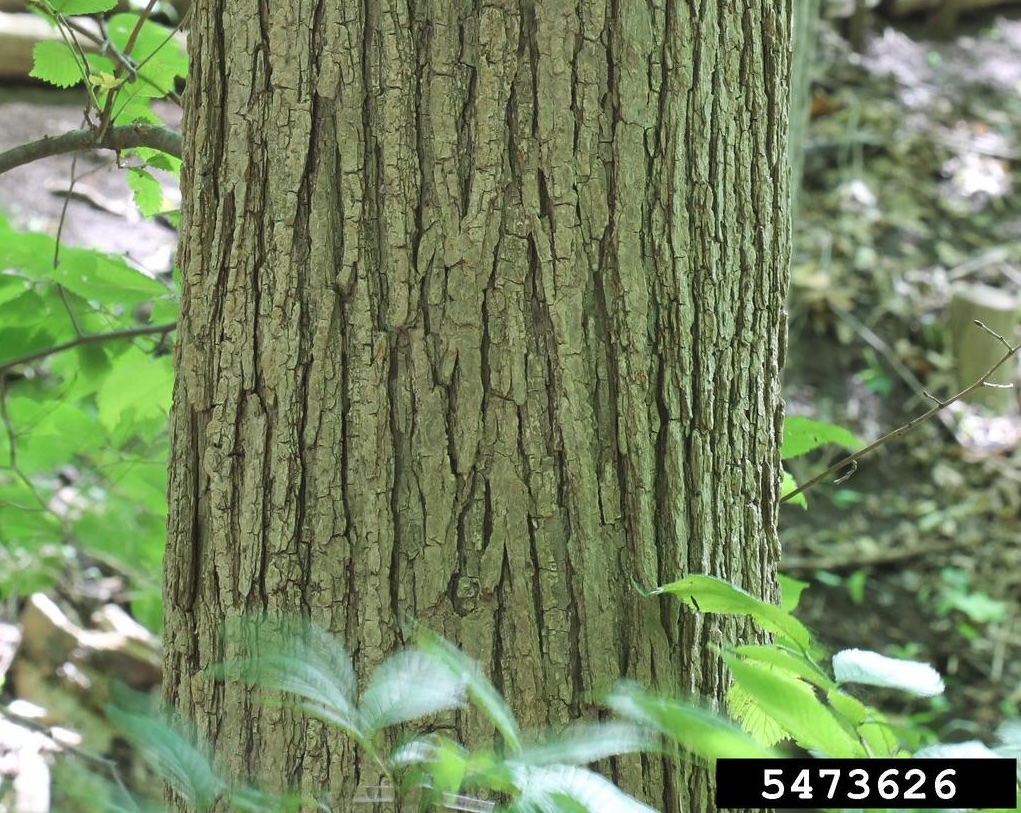
Bark is dark gray to reddish brown and deeply furrowed
Benefits
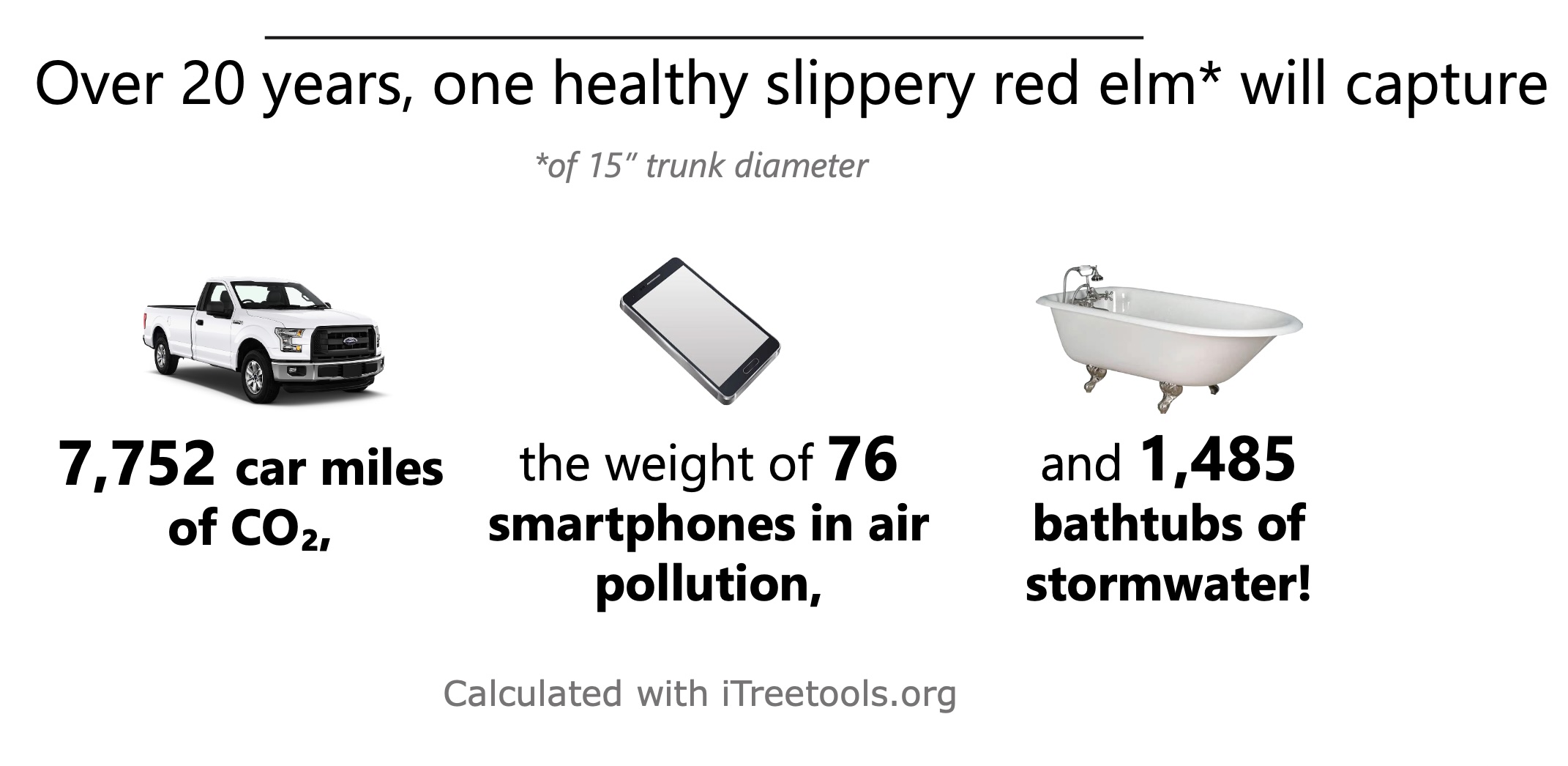
Over a 20-year period, a healthy slippery elm with a diameter of 15 inches will offset 7,752 car miles worth of CO2, absorb enough stormwater to fill 1,485 bathtubs, and remove an amount of pollution from the air – in gaseous and particulate form – equivalent in weight to 76 smartphones! Learn more at: https://mytree.itreetools.org/
Tree of the Week Video
By University of Kentucky Forestry and Natural Resources Extension
Click to Watch